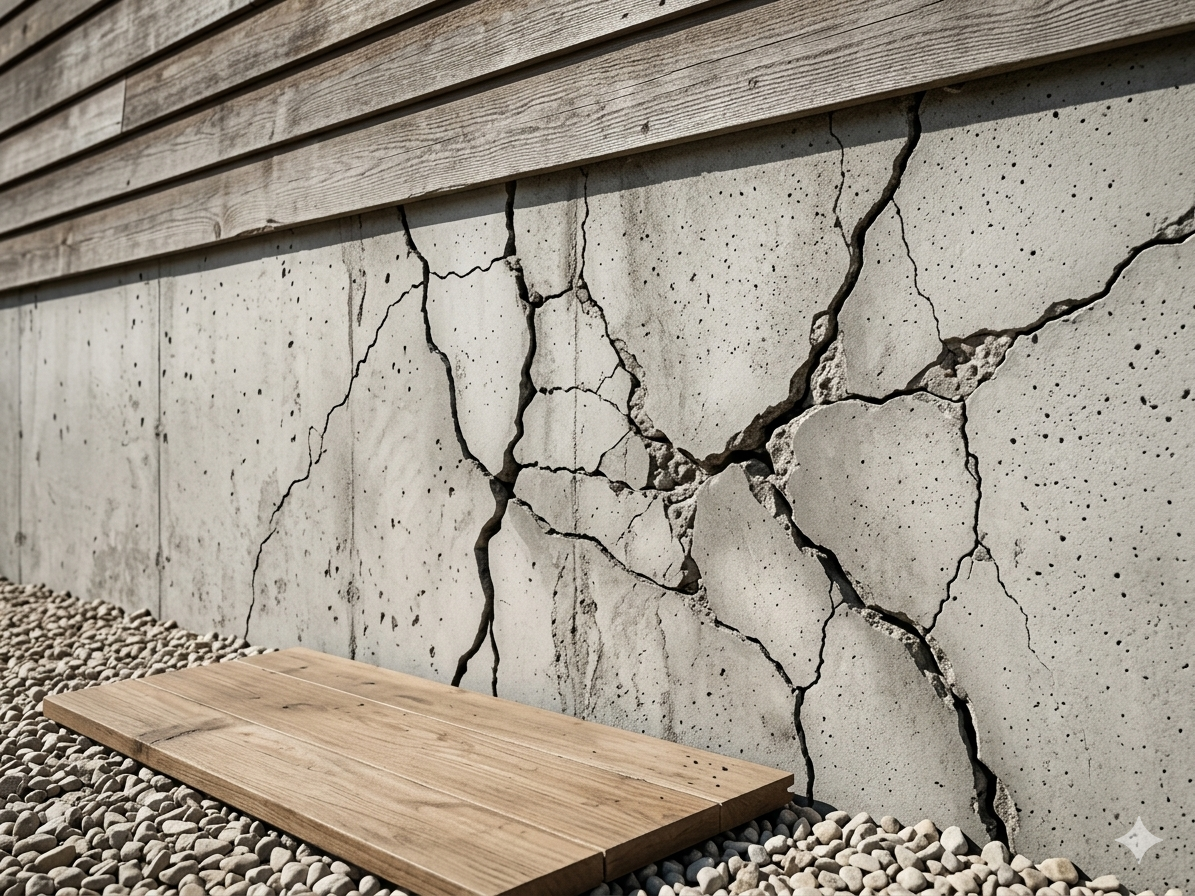
Stair-Step Brick Cracks
Stair-step brick cracks form when a foundation settles unevenly, forcing the brick veneer to crack along the weakest path — the mortar joints. They almost always indicate active foundation movement and require structural inspection if wider than 1/8 inch.
What it is
A stair-step crack is a diagonal pattern of cracks following mortar joints up and across a brick wall, resembling a flight of stairs. Because brick veneer is rigid and mortar is brittle, the wall cracks where the structure shifts beneath it.
What causes it
- Differential foundation settlementOne section of the foundation has settled lower than another, creating tension on the brick.
- Expansive clay soil movementArkansas clay swells when wet and shrinks when dry, lifting and dropping the foundation in cycles.
- Poor drainage and saturated soilPersistent moisture concentrated in one area causes localized soil movement.
- Tree root influenceMature trees draw moisture out of clay subsoils, causing localized shrinkage and settlement.
Diagnostic checklist
- Measure the widest point of the crack with a feeler gauge or ruler
- Photograph the crack with a date stamp
- Mark the end with a pencil — if it grows past the mark in 60 days, the foundation is actively moving
- Check the corresponding interior wall for matching drywall cracks
- Inspect doors and windows on the affected wall for binding or gaps
When to call a professional
Call a structural professional immediately if cracks are wider than 1/4 inch, growing visibly, accompanied by interior drywall cracks or door operation issues, or paired with one corner of the home dropping.
DIY vs professional
No DIY mortar patch will solve a stair-step crack. The wall is moving — a patch will simply re-crack within months. The only permanent solution is to address the underlying foundation movement with engineered piers and drainage correction.
Arkansas context
In Arkansas — particularly Pulaski, Saline, Faulkner, and Lonoke counties — stair-step cracking is the single most common foundation issue we diagnose.
FAQ
-
They are always a sign of foundation movement, but severity depends on width, growth rate, and location.
-
Generally, no — long-term soil movement is excluded by most homeowner policies.
-
No. They may temporarily appear to close during wet seasons, but they will reopen.
- Foundation RepairPermanent stabilization for settling, shifting, and cracked foundations.
- Foundation Crack RepairEngineered crack injection — not just cosmetic patching.
- Settling Foundation RepairStop active foundation settlement and restore lost elevation.
- Drainage SolutionsFrench drains, surface grading, and gutter management to protect your foundation.