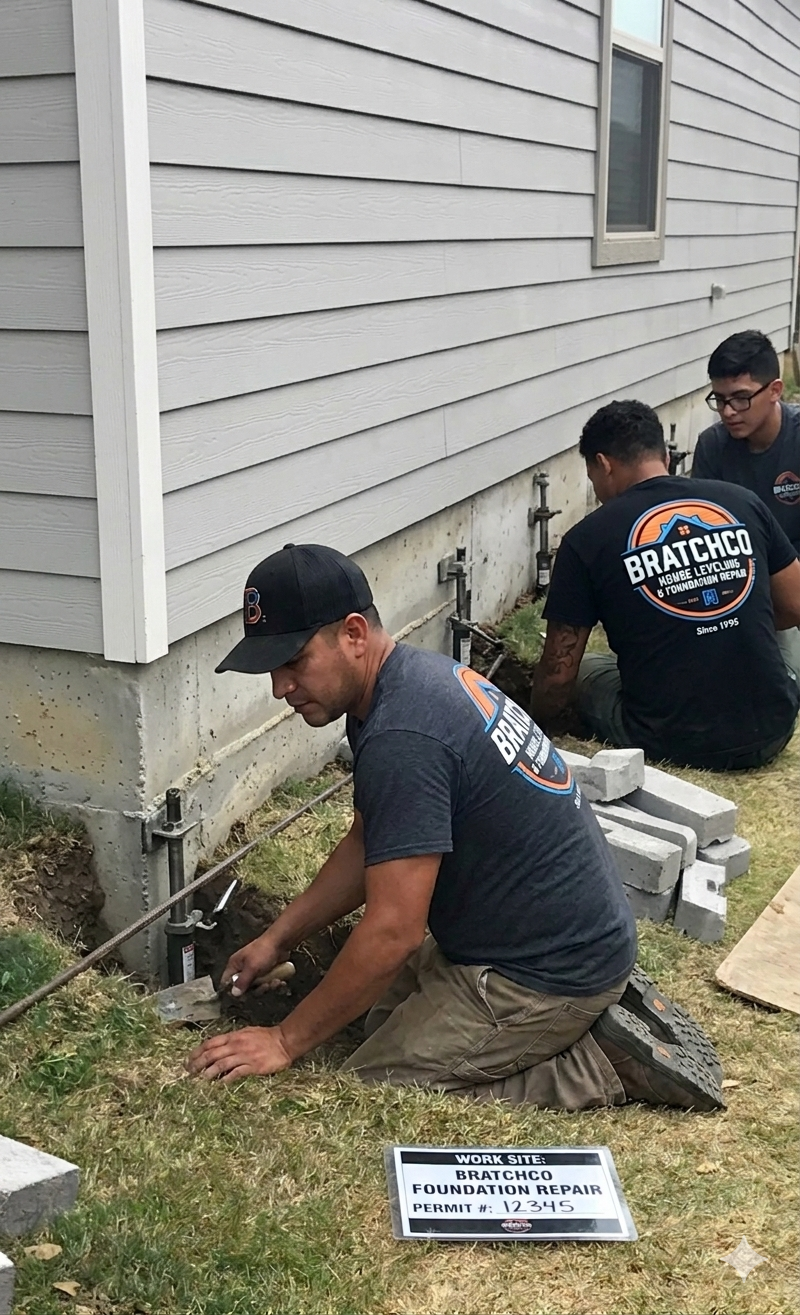
Arkansas House Leveling — Recover Every Inch of Lost Elevation
House leveling is the process of restoring a settled foundation back to a structurally sound, near-original elevation. BratchCo uses Topcon rotating laser systems to map every room of your home down to 1/16 of an inch, then engineers a lift sequence that protects finishes, plumbing, and tile lines.
Why BratchCo for house leveling?
- 1/16-inch laser elevation mapping of every interior room
- Engineered lift sequence to protect tile, brick, and plumbing
- New ICC-rated steel shims, beams, and pier caps as required
- Crawl space and slab leveling on a single project when needed
- Documented before/after elevation report
How a house leveling project actually works.
Elevation Survey
Laser map of the entire interior plus exterior brick — you receive a full elevation report.
Lift Engineering
We model the safe lift sequence to minimize cracking in tile, drywall, and brick.
Hydraulic Re-Lift
Synchronized hydraulic jacks recover lost elevation in measured stages.
Shimming & Bracing
New steel shims and pier caps lock the elevation in place.
Engineered options, matched to your home.
Pier & Beam Re-Leveling
Hydraulic lift on perimeter and interior piers, with new beams or shims as needed.
Slab Re-Leveling with Piers
Steel piers installed under settled slab sections and hydraulically lifted.
Mudjacking / Polyurethane Lift
For lightly settled slab sections and concrete flatwork.
How to know it's time.
- Marble or ball rolls visibly across the floor
- Uneven gaps under interior doors
- Tile cracks following a straight line across rooms
- Bouncy or spongy floors over a crawl space
Why this matters here.
Arkansas' freeze-thaw cycles in the Ozark and River Valley regions, combined with expansive clays in the Mississippi Embayment, create an uneven settlement pattern that requires precision re-leveling rather than spot repair.
Direct answers about house leveling.
-
Most homes recover 70–95% of lost elevation. We never force a lift that risks cracking finishes — the goal is structural soundness, not perfect cosmetics.
-
Some hairline movement in finishes is possible. Our lift sequence is engineered to minimize this, and we coordinate with finish trades when needed.
House Leveling across Arkansas.
Every city we serve has a dedicated page with regional soil context and engineering notes.
- House Leveling in North Little Rock
- House Leveling in Conway
- House Leveling in Benton
- House Leveling in Bryant
- House Leveling in Cabot
- House Leveling in Sherwood
- House Leveling in Jacksonville
- House Leveling in Searcy
- House Leveling in Russellville
- House Leveling in Hot Springs
- House Leveling in Pine Bluff
- House Leveling in Texarkana
- House Leveling in Bella Vista
- House Leveling in Maumelle
- House Leveling in Heber Springs
- House Leveling in Magnolia
- House Leveling in Arkadelphia
- House Leveling in Hope
- House Leveling in Camden
- House Leveling in Centerton
- House Leveling in Siloam Springs
- House Leveling in Forrest City
- House Leveling in Wynne
- House Leveling in Malvern
- House Leveling in Beebe
- House Leveling in Marion
- House Leveling in Alma
- House Leveling in Trumann
- Foundation Repair in ArkansasPermanent stabilization for settling, shifting, and cracked foundations.
- Pier & Beam Repair in ArkansasRe-level, re-shim, and re-pier traditional Arkansas pier & beam homes.
- Slab Repair in ArkansasPermanent fix for cracked, settled, and post-tension slab foundations.
- Concrete Lifting in ArkansasPolyurethane lift for sunken driveways, sidewalks, patios, and pool decks.
- Uneven or Sloping FloorsFloors slope when the foundation beneath them settles or when crawl space joists and beams sag. A slope greate
- Sticking Doors & WindowsSticking doors and windows that worsen seasonally are a classic foundation movement symptom. As the foundation
- Wall Separation from Ceiling/FloorWhen walls visibly pull away from ceilings or floors, the home's framing has distorted. Causes include foundat