Cracks, sticking doors, sloping floors — and what they mean.
Visual symptom database with severity, causes, and the engineered fix for each.
Identify your symptom. Get the engineered fix.
Every symptom below has its own page with causes, severity, diagnostic checklists, and the BratchCo solution.
Visible Cracks
Stair-Step Brick Cracks
Stair-step brick cracks form when a foundation settles unevenly, forcing the brick veneer to crack along the weakest path — the mortar joints. They almost alw…
Drywall Cracks
Drywall cracks become foundation-related when they radiate diagonally from door or window corners, span ceilings, reopen after patching, or appear together with…
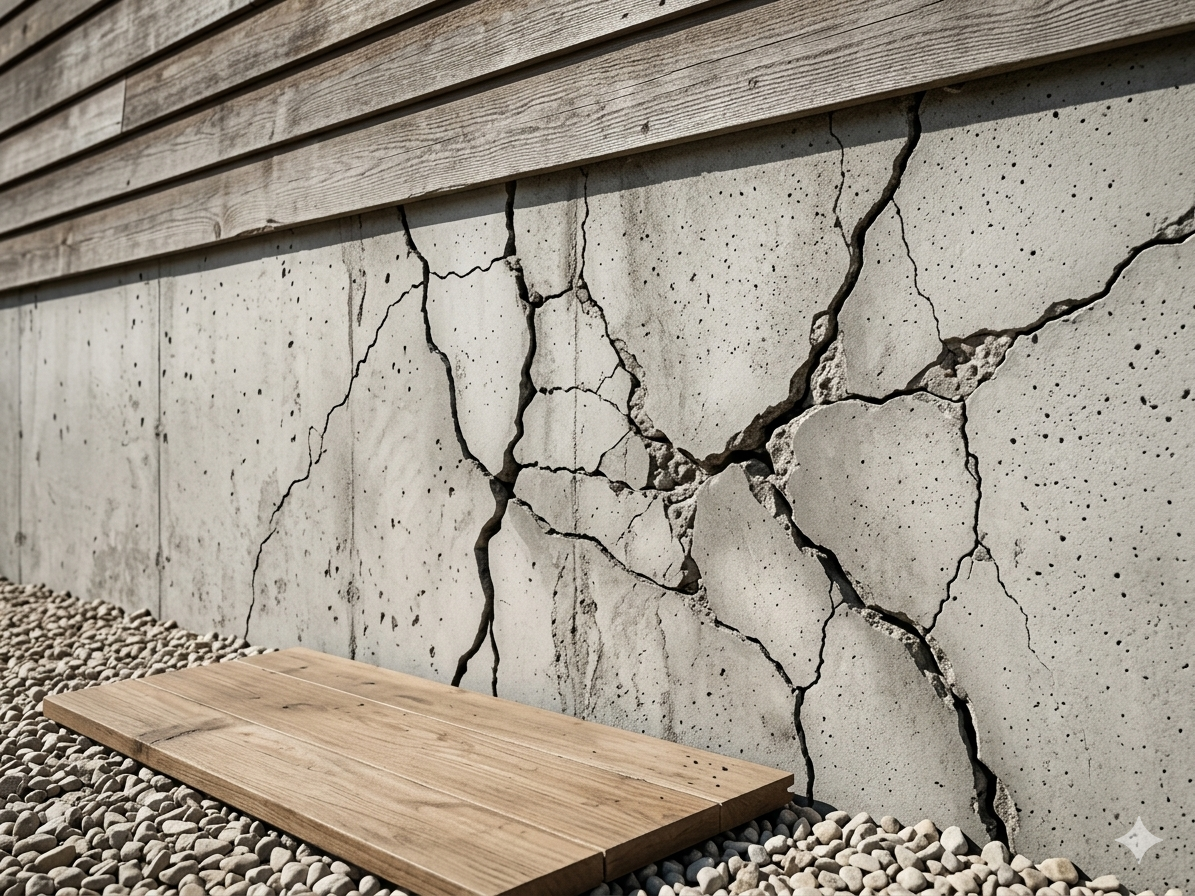
Foundation Wall Cracks
Foundation wall cracks fall into three categories: vertical (often non-structural shrinkage), diagonal (typically settlement), and horizontal (urgent structural…
Floor & Tile Cracks
Tile cracks running in a straight line across multiple tiles, concrete slab cracks wider than 1/8 inch, and cracks that re-open after repair indicate the slab b…
Movement & Distortion
Uneven or Sloping Floors
Floors slope when the foundation beneath them settles or when crawl space joists and beams sag. A slope greater than 1 inch over 15 feet indicates structural co…
Sticking Doors & Windows
Sticking doors and windows that worsen seasonally are a classic foundation movement symptom. As the foundation shifts, the framing distorts, pulling door and wi…
Wall Separation from Ceiling/Floor
When walls visibly pull away from ceilings or floors, the home's framing has distorted. Causes include foundation settlement, roof truss uplift, and crawl space…
Bowing Walls
Bowing walls are caused by hydrostatic pressure from saturated soil pressing against the foundation. Even a 1-inch bow is a structural concern. Helical tieback …
Chimney Pulling Away from Home
A chimney pulling away from your home indicates the chimney's independent footing is settling at a different rate than the main foundation. Even a 1/2-inch gap …
Moisture & Air
Crawl Space Moisture
Crawl space moisture in Arkansas is driven by humid outside air entering through vents, condensing on cool surfaces, and saturating wood. The permanent fix is e…
Crawl Space Humidity
Crawl space humidity above 60% in Arkansas leads to mold, rot, and elevated cooling bills. Dehumidification combined with envelope sealing brings humidity to a …
Standing Water at Foundation
Standing water against your foundation is the single most damaging condition for an Arkansas home. It saturates expansive clay, drives soil movement, and erodes…
Musty Smell from Floor
Musty smell rising through the floor is your home telling you the crawl space has a moisture problem. Air leaks from the crawl space carry mold spores and micro…