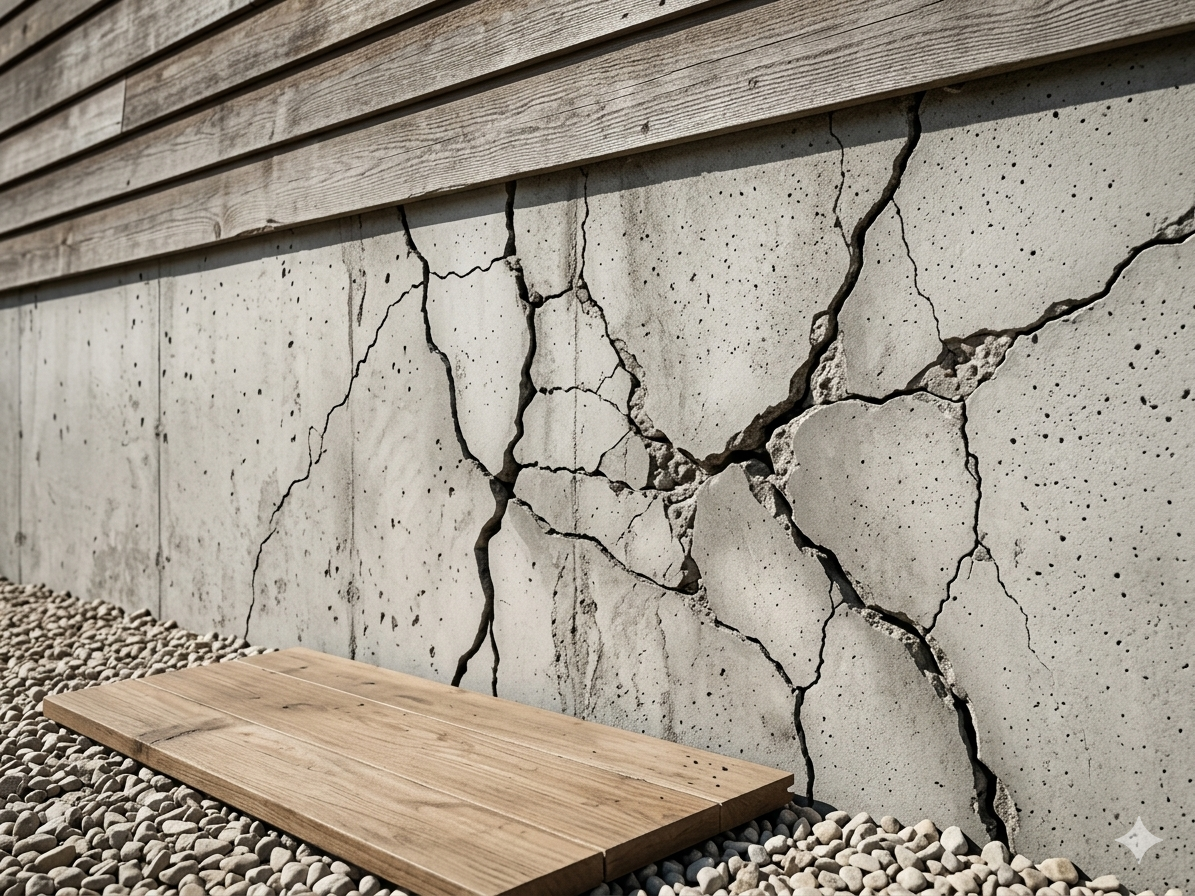
Symptom · movement
Bowing Walls
Short answer
Bowing walls are caused by hydrostatic pressure from saturated soil pressing against the foundation. Even a 1-inch bow is a structural concern. Helical tieback anchors are the engineered solution.
URGENT: A bowing wall is a structural emergency. Address within weeks of detection.
What it is
A bowing wall is a foundation wall that is no longer plumb — it's pushing inward under lateral load.
What causes it
- Hydrostatic pressureSaturated clay backfill pushes the wall inward.
- Frost heaveFrozen soil expands against the wall in winter.
- Tree root pressureLarge root systems can apply lateral force.
Diagnostic checklist
- Hold a 4-foot level vertically against the wall
- Measure the gap at the widest point
- Look for horizontal cracks at mid-height
When to call a professional
Call immediately. Bowing walls do not stabilize on their own.
DIY vs professional
No DIY fix. The wall is loaded beyond design — only engineered intervention works.
Arkansas context
Arkansas basements are most common in the Ozarks and Hot Springs region — where we see the most bowing wall calls.
FAQ
-
In 90%+ of cases, helical tiebacks save the wall — even at significant deflection.
Severity
urgent
A bowing wall is a structural emergency. Address within weeks of detection.
Recommended services
- Structural RepairEngineered solutions for load-path failures, bowing walls, and major settlement.
- Retaining Wall RepairStabilize leaning, cracking, or failed retaining walls with helical anchors.
- WaterproofingInterior and exterior basement & foundation waterproofing systems.
- Drainage SolutionsFrench drains, surface grading, and gutter management to protect your foundation.