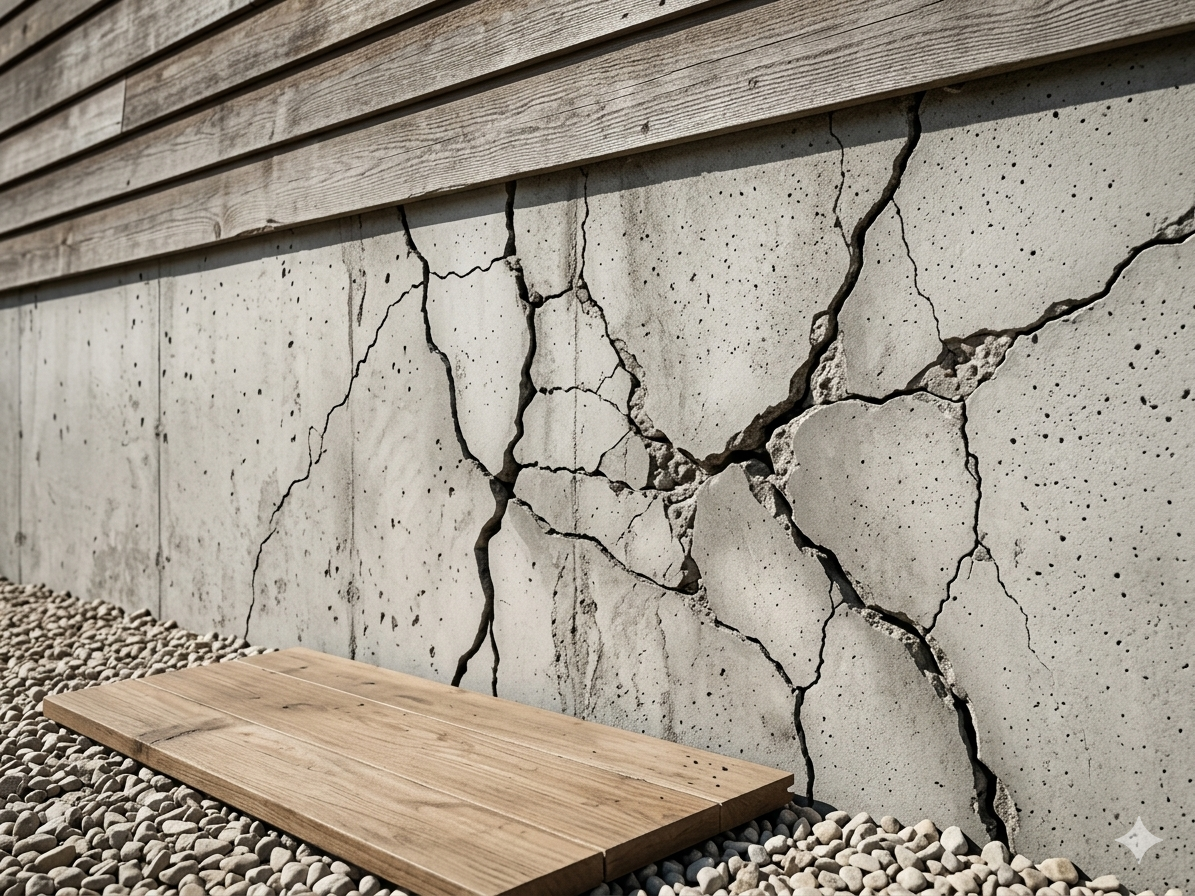
Drywall Cracks
Drywall cracks become foundation-related when they radiate diagonally from door or window corners, span ceilings, reopen after patching, or appear together with sticking doors and exterior brick cracks.
What it is
Drywall cracking is normal in any home — but the pattern matters. Hairline cracks running straight along seams are usually cosmetic. Diagonal cracks from door and window corners and cracks that re-open after repair indicate framing distortion driven by foundation movement.
What causes it
- Foundation settlementDifferential settlement racks the wall framing, concentrating stress at openings.
- Roof and ceiling truss upliftSeasonal humidity changes cause truss movement that cracks the ceiling-wall joint.
- Soil moisture cyclesHeave and settle cycles in expansive clay distort the wall plane.
Diagnostic checklist
- Note the orientation: diagonal from a corner is more concerning than straight along a seam
- Look for matching exterior cracks on the corresponding wall
- Check whether doors and windows on the same wall operate normally
When to call a professional
Call a professional when drywall cracks reopen within months of patching, when paired with exterior brick cracks or door/window issues, or when crack width exceeds 1/8 inch.
DIY vs professional
Cosmetic patching is fine for hairline straight cracks. Diagonal corner cracks should be diagnosed before patching.
Arkansas context
Arkansas' humid summers and cold dry winters create dramatic seasonal humidity swings that drive normal cosmetic drywall cracking.
FAQ
-
No. Many drywall cracks are cosmetic — caused by humidity changes or normal settling.