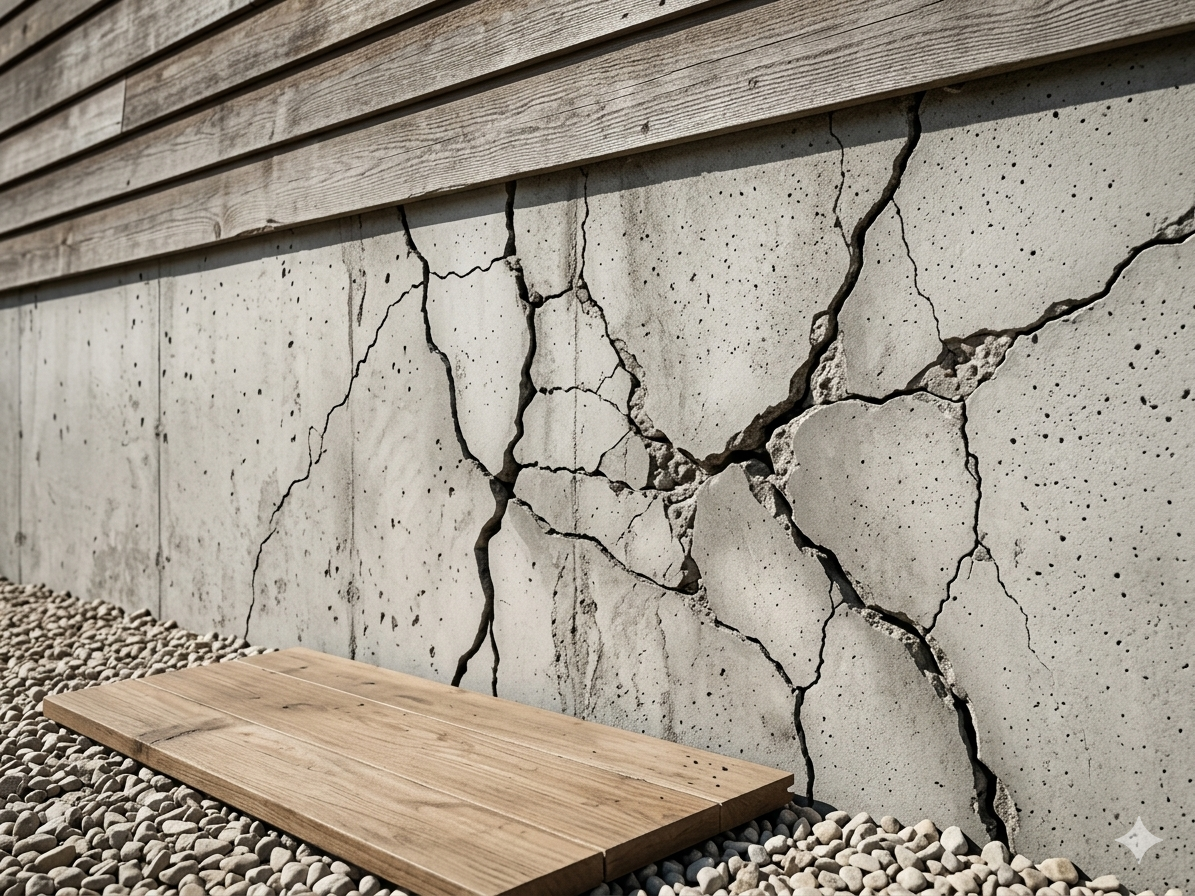
Foundation Crack Repair in Colt, Arkansas
Surface patching a foundation crack is a guarantee it will reopen. BratchCo identifies whether the crack is structural or non-structural, addresses the underlying cause (often soil movement), and uses engineered injection systems — epoxy for structural, polyurethane for water control — to permanently seal the crack. Colt homes face the additional regional context of crowley's ridge — which is why our foundation crack repair approach in St. Francis County is engineered specifically for these soils.
What foundation crack repair looks like in Colt.
Colt sits in crowley's ridge territory — soil conditions that produce loess erosion more frequently than other parts of Arkansas. Our foundation crack repair approach here typically involves epoxy injection engineered to aggressive load-bearing depth, paired with drainage redesign so the underlying cause is addressed alongside the symptom.
- Structural epoxy injection — stronger than the surrounding concrete when cured
- Closed-cell polyurethane injection for active water leaks
- Carbon fiber reinforcement on cracks with continued movement
- Root-cause stabilization (piers and drainage) when needed
Soil context
Crowley's Ridge is a unique north-south band of wind-blown loess (silt). The fine-grained loess erodes rapidly under stormwater.
The right approach for Colt.
Epoxy Injection
Two-part structural epoxy fills the crack and bonds the concrete back into a monolithic unit.
Polyurethane Injection
Expanding polyurethane that flexes with the crack and stops water leaks permanently.
Carbon Fiber Strapping
Surface-applied carbon fiber to prevent crack reopening.
Questions from Colt homeowners.
-
BratchCo provides a free 60-minute on-site evaluation in Colt, AR. Our team builds a written engineered scope based on your home and Crowley's Ridge soil conditions — no high-pressure sales tactics.
-
Crowley's Ridge is a unique north-south band of wind-blown loess (silt). The fine-grained loess erodes rapidly under stormwater.
-
Cracks wider than 1/4 inch, horizontal cracks in basement walls, and any crack with displacement (one side higher than the other) are structural and require engineering review.
- Stair-Step Brick CracksStair-step brick cracks form when a foundation settles unevenly, forcing the brick veneer to crack along the w
- Foundation Wall CracksFoundation wall cracks fall into three categories: vertical (often non-structural shrinkage), diagonal (typica
- Drywall CracksDrywall cracks become foundation-related when they radiate diagonally from door or window corners, span ceilin
Foundation problems never fix themselves — they get more expensive.
Every season of Arkansas soil movement widens the cracks. Get a free, no-pressure diagnosis before the scope grows.